Explainers
How the hardware actually moves data.
Short plates on the parts of a multi-GPU machine that decide how fast it runs: PCIe switches, the links between them,
the CPU in the middle, and the drive the models load from. Each comes with the numbers behind it, marked as measured or as arithmetic.
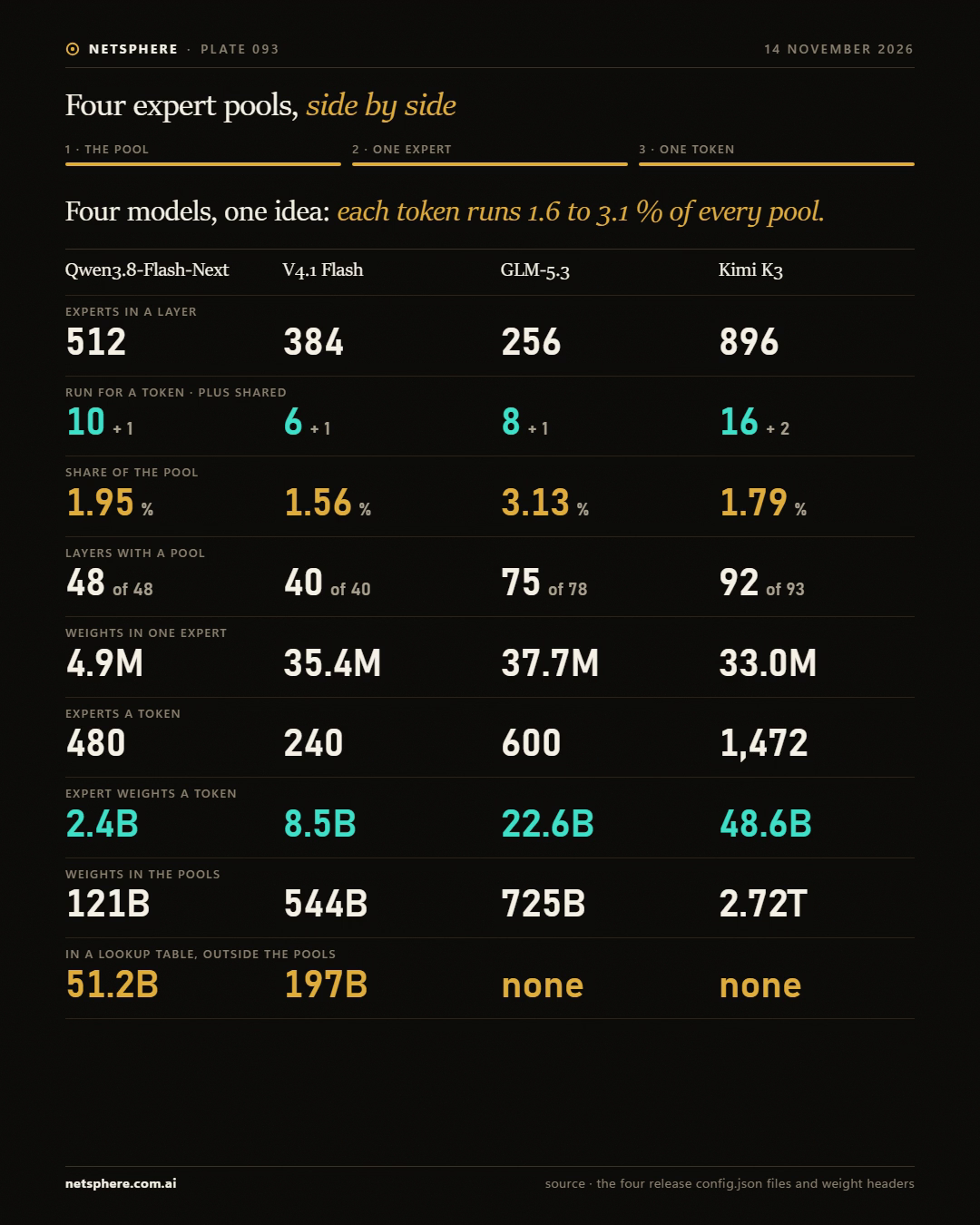
14 November 2026 · Plates 089–095 · 097 · 098
Dense against MoE, then Qwen3.8-Flash-Next, DeepSeek V4.1 Flash, GLM-5.3 and Kimi K3 side by side: pool size, picks per token, expert size and lookup tables, in ten clips from the release configs.
Plates 089–095 · 097 · 098 · animated
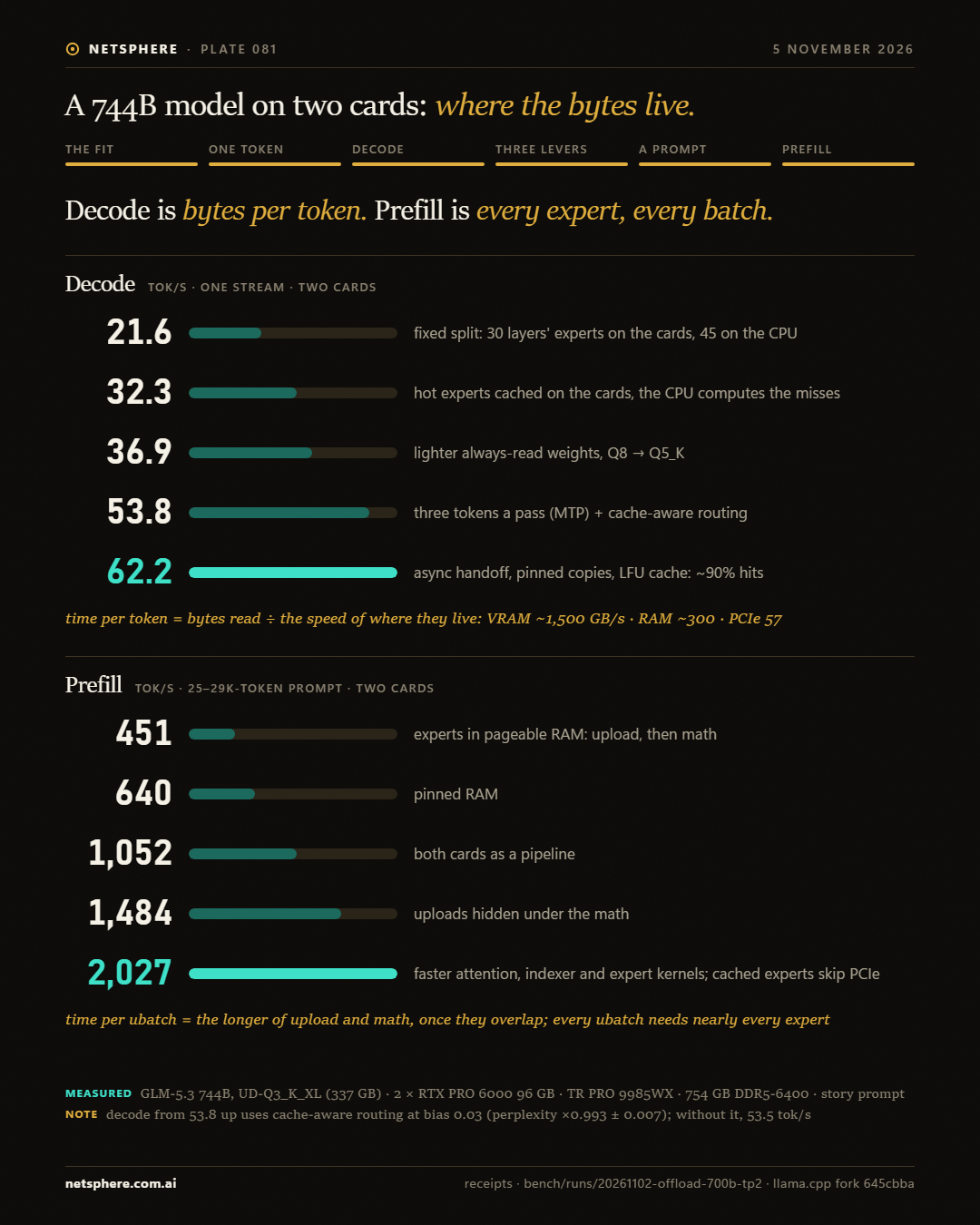
11 November 2026 · Plates 081–087
A 337 GB model on 96 GB cards, in seven clips: what sits on the cards and what stays in RAM, what one token reads, three decode levers, why a prompt is a different problem, and a routing setting we leave off.
Plates 081–087 · animated
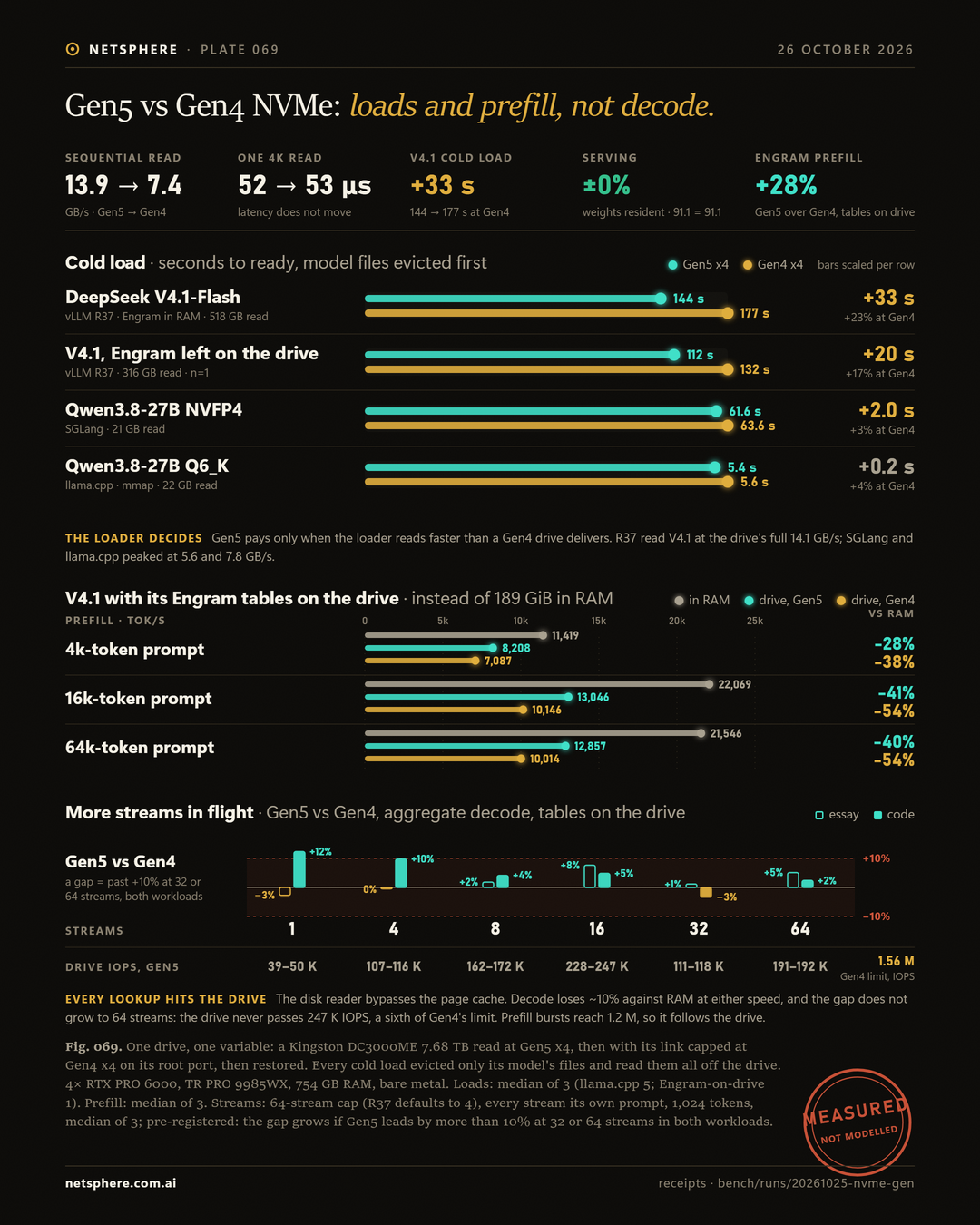
26 October 2026 · Plate 069
One drive capped from Gen5 to Gen4: cold loads on vLLM, SGLang and llama.cpp, serving speed, and DeepSeek V4.1-Flash with its Engram tables read from the drive, up to 64 streams.
Plate 069 · measured
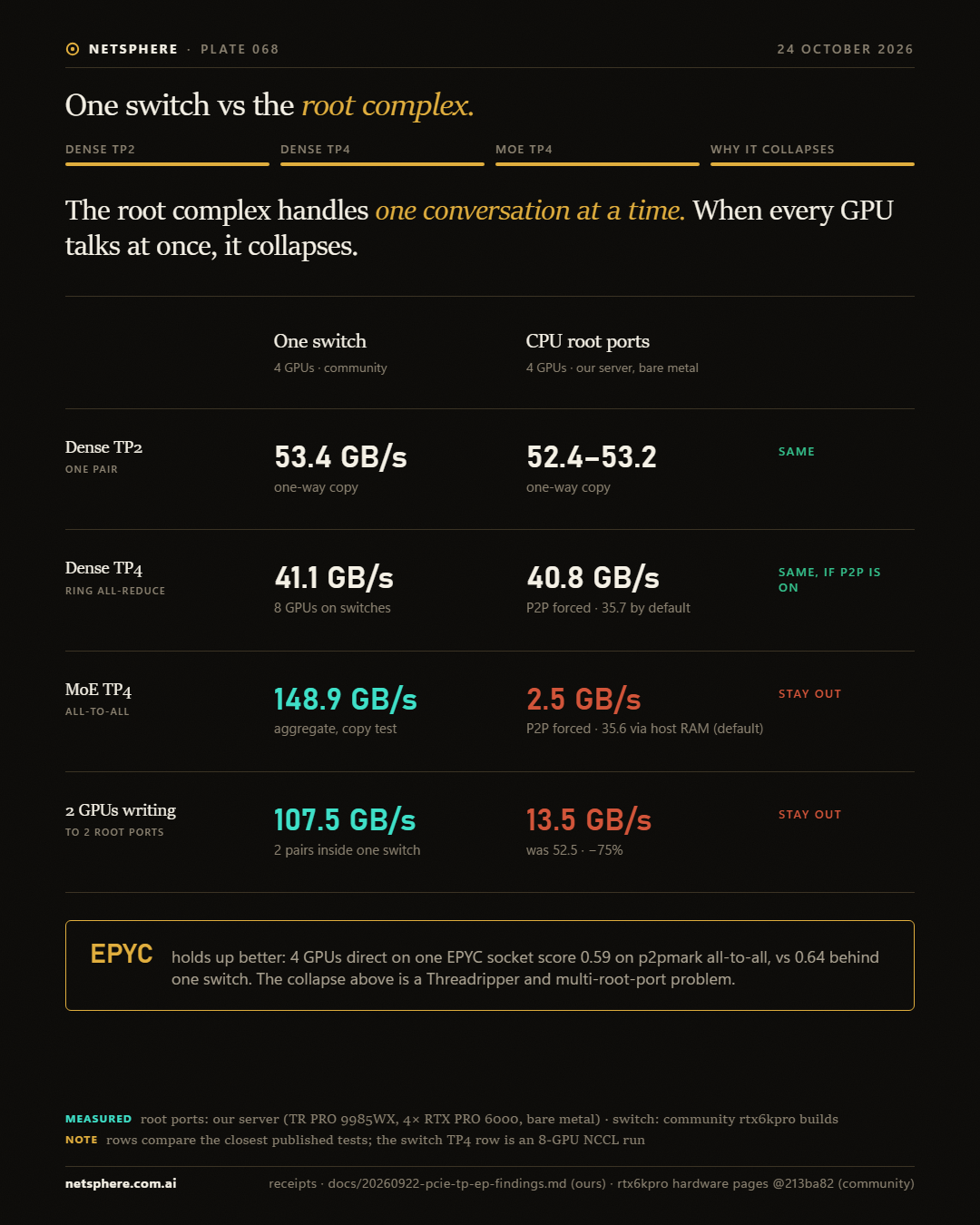
24 October 2026 · Plate 068
Four GPUs behind one switch against four on CPU root ports, through dense TP2, dense TP4 and mixture-of-experts all-to-all, and why the collapse happens.
Plate 068 · animated
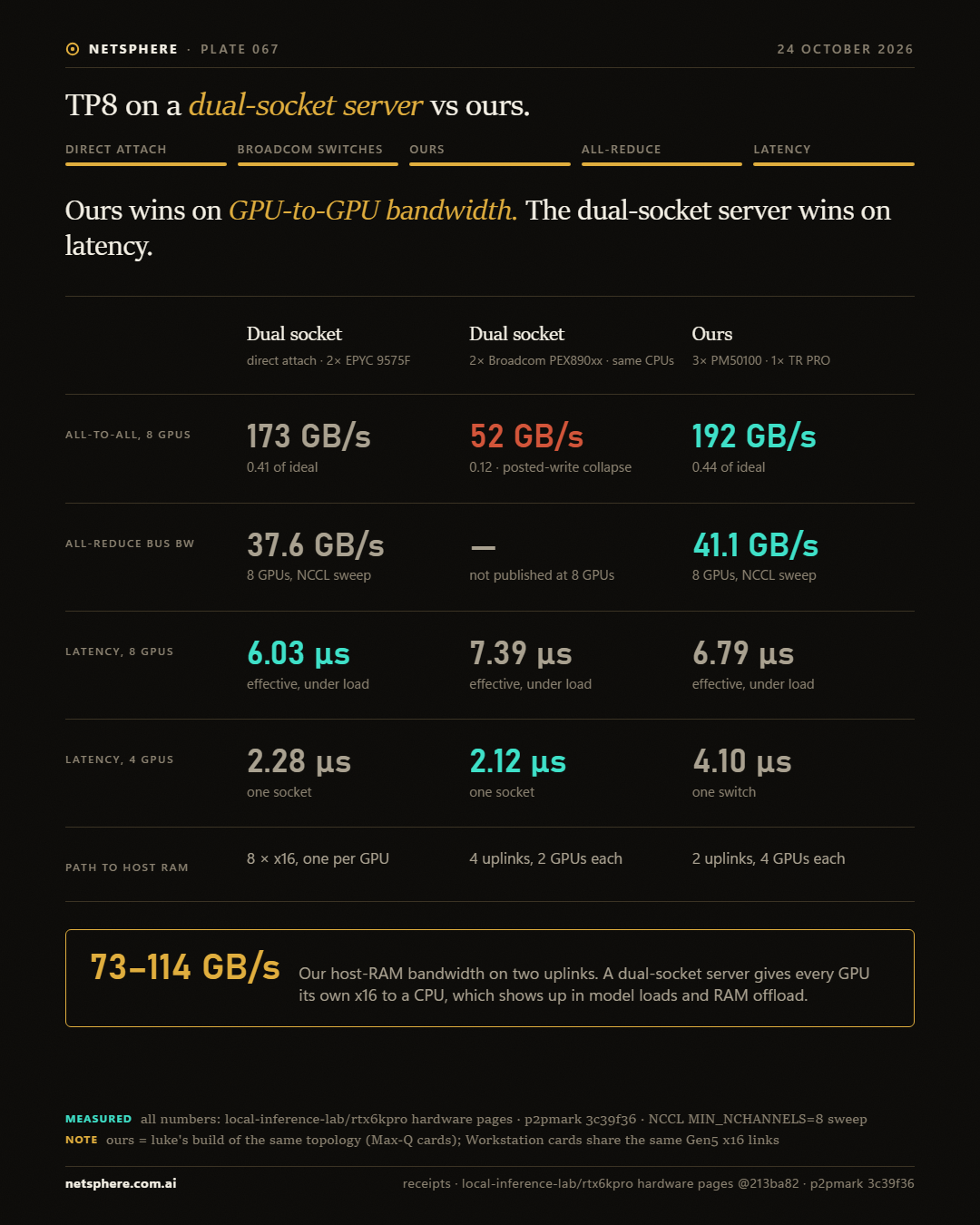
24 October 2026 · Plates 066 · 067
Eight GPUs on three switches with one CPU, against two standard dual-socket servers with the same GPUs, measured with the same tool.
Plates 066 · 067 · animated
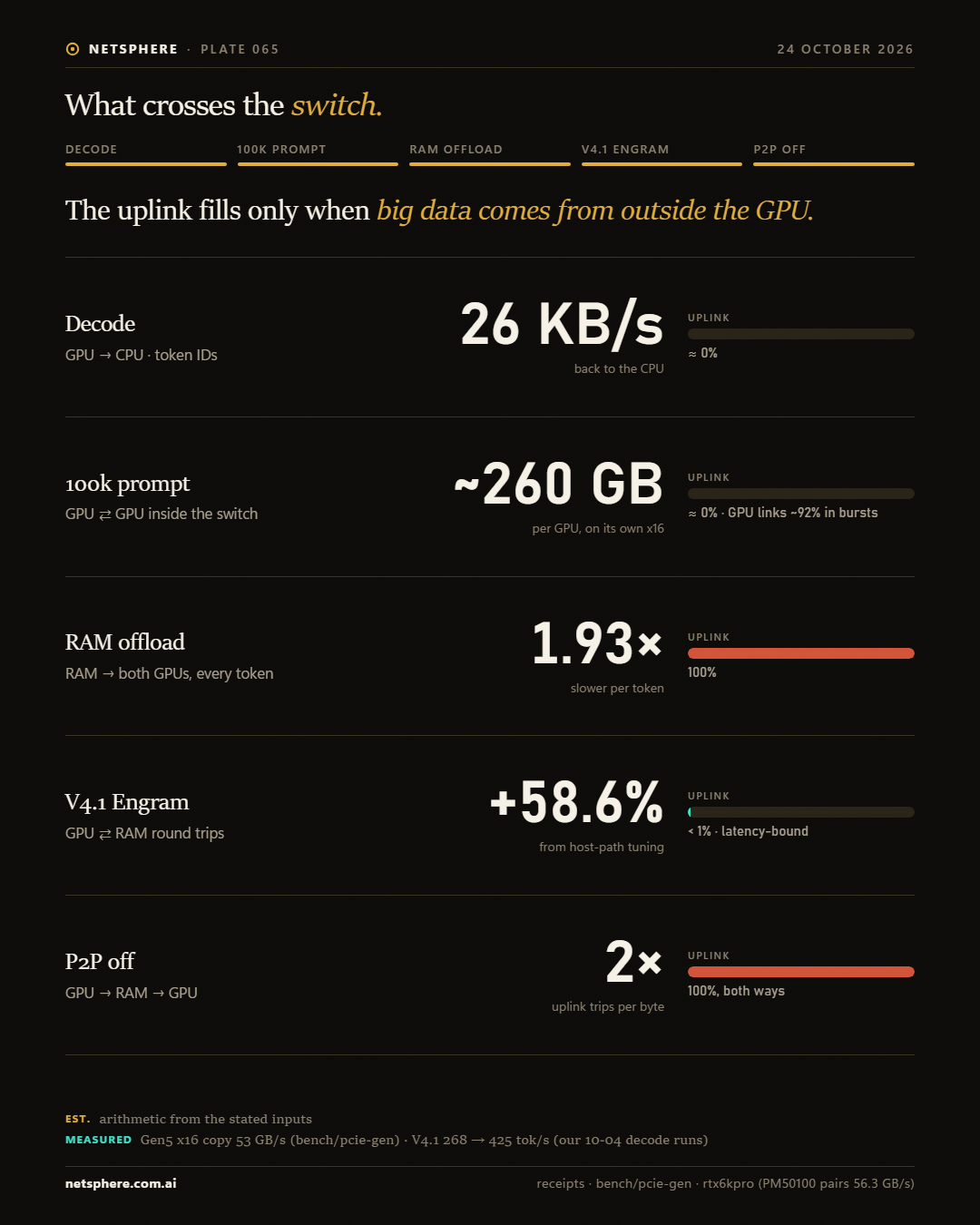
24 October 2026 · Plate 065
Why two GPUs sharing one slot through a switch barely notice during inference, and the four cases where the shared uplink does fill.
Plate 065 · animated · interactive version